
The Business and Financial Risks of Environmental Crime in Global Supply Chains
Environmental crime – covering illegal fishing, logging, mining, land conversion, wildlife trade, pollution and waste crime - is (conservatively) estimated to be worth approximately USD 300 billion annually.
In addition, illegal logging, fishing and wildlife trafficking alone are estimated to generate economic losses of more than USD 1 trillion each year through ecosystem degradation.
Given these stark figures, Chronos was delighted to work alongside Globalbalance and United for Wildlife – an initiative of The Royal Foundation of the Prince and Princess of Wales - earlier this year on a report examining what this means for companies and financial institutions.
As the report shows, this is beginning to translate into real business risk through tighter regulation, enforcement, market disruption and supply chain exposure. For example:
In Brazil, cattle linked to illegal deforestation entered JBS’s supply chain through indirect suppliers, leading to a USD 8 million fine and investor exclusion.
Airlines and logistics providers have faced repatriation costs, penalties and disruption where trafficked wildlife was concealed in shipments.
An EU ban on Sri Lankan fisheries in 2015 following illegal fishing caused immediate loss of export market access.
From blind spot to business risk
Despite the risks, companies and financial institutions are not adequately identifying or addressing environmental crime in their own operations, supply chains and portfolios. It is rarely named in risk assessments, screened for in due diligence, or traced through supply chains and investment decisions. For most, it remains a blind spot.
As the report, published by United for Wildlife demonstrates, environmental crime creates risks (Figure 1) for companies and investors in two ways.
First, regulation and enforcement are tightening, making illegal goods and financial flows harder to conceal. Companies and financial institutions are already facing real consequences, with enforcement driving fines in the hundreds of millions, alongside asset seizure, market exclusion, and criminal liability. For example:
USD 100m+ Anti-Money Laundering fines linked to environmental crime in recent enforcement actions.
USD 40m+ forfeited in a single Lacey Act (a US Act that makes it a crime to import or trade wildlife, fish, plants or timber taken, transported or sold in breach of US or foreign law) case for illegal timber imports.
USD 40m fine for Carnival (Princess Cruise Lines) for deliberate vessel pollution and concealment.
Second, environmental crime degrades ecosystems, increasing supply costs, volatility and price instability. These physical and systemic risks are latent but escalating, accumulating over time. By obscuring the origin, legality and environmental impacts of goods and activities, environmental crime can also distort baseline data and reduce confidence in nature-related risk assessments and disclosures, weakening risk management and investment decisions, and undermining climate and nature transition plans.
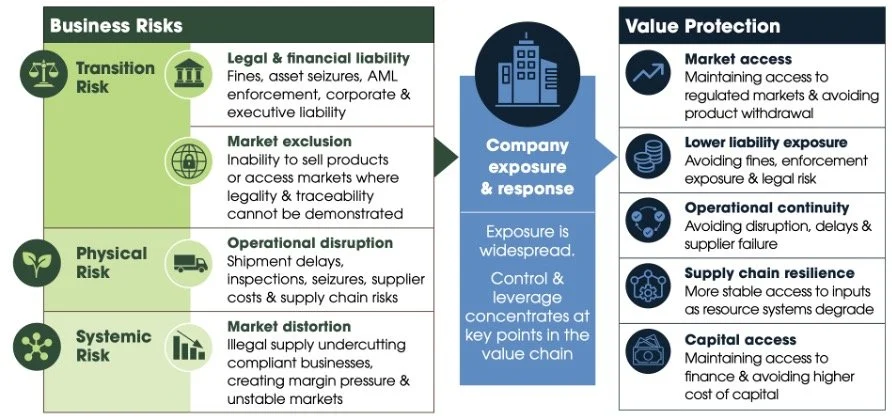
Figure 1. From Risk to Resilience (United for Wildlife 2026)
Environmental crime cannot be eliminated completely, but exposure can be managed.
Exposure is not spread evenly. It concentrates where high-risk commodities and financial flows pass through a few chokepoints: commodity traders and processors, manufacturers turning raw materials into products, transport and logistics providers, and the banks and investors financing them. Upstream, it is greatest for commodities and regions with weak governance and complex, indirect supply chains, such as cattle, timber, gold and seafood, where illegal products are most easily mixed with legal ones.
Enforcement is uneven, but the landscape is shifting:
Detection is getting more likely. For example, advancements in satellite monitoring, timber and seafood forensics, and financial intelligence are making illegal inputs more visible.
The consequences are moving beyond fines, increasingly affecting market access, seized goods, being cut off from trading platforms or finance, and liability reaching up the supply chain and into investors. For example, Elemetal's USD 15 million forfeiture came with a ban on buying precious metals.
This does not mean building new systems, but folding environmental crime into existing controls, due diligence and supplier screening, then focusing effort on the commodities, sourcing regions and counterparties where exposure is highest. The TNFD's LEAP approach provides a structured way to do this. Its new Guidance on Environmental Crime, also developed in partnership with The Royal Foundation, shows how companies and financial institutions can build environmental crime into their nature-related assessments. Together, the report and the guidance move the debate from why environmental crime matters to how organisations can identify and manage their exposure in practice.
Turning commitments into delivery
At Chronos Sustainability, we help companies and investors move from nature commitments to delivery. That means addressing the same weak points that allow environmental crime into supply chains and portfolios. For example, we have:
Developed deforestation sourcing policies and supply chain risk tools for food and beverage and automotive companies.
Designed and piloted a deforestation benchmark of 20 of the world's largest pulp and paper producers.
Supported a group of UK asset owners, originally convened through Brunel Pension Partnership, on a climate physical risk engagement programme with 20 consumer staples companies.
Led the award-winning Global Investor Commission on Mining 2030, which is advancing environmental and social safeguards across the sector.
From blind spot to business practice
Environmental crime will never be eliminated, but it can be managed. The most resilient organisations are those that understand where their exposure to environmental crime lies, build checks across their existing systems, and have clear ownership across sustainability, compliance and finance teams. The guidance now exists and the challenge is to put it into practice.
—
You can read the full Business Case Report and CEO Briefing, prepared for The Royal Foundation by Globalbalance and Chronos Sustainability here:
Full Report: UfW_Business-Case-on-Environmental-Crime-web-small-1.pdf
CEO Briefing: Business-Case-on-Environmental-Crime-CEO-Brief-1.pdf
—-
For more information on Chronos Sustainability’s nature work, please get in touch with Dr Rebecca Drury, Chronos’ Principal Consultant, Nature; and Expert Member of the UK Government’s Wildlife Trade Advisory Group.
